
Starting a skincare routine can feel confusing at first. There are countless products, trends, and opinions online, and many beginners end up thinking they need a shelf full of expensive items to take proper care of their skin. In reality, a good skincare routine does not need to be complicated. The best routine is usually the one that is simple, consistent, and suitable for your skin type.
If you are just beginning, it is important to focus on the basics before trying advanced treatments or trendy ingredients. Healthy-looking skin is often the result of regular care, patience, and using products that support your skin instead of overwhelming it. A beginner-friendly skincare routine should help cleanse the skin, protect it, and keep it balanced without creating unnecessary irritation.
Understand Your Skin Type Before You Start
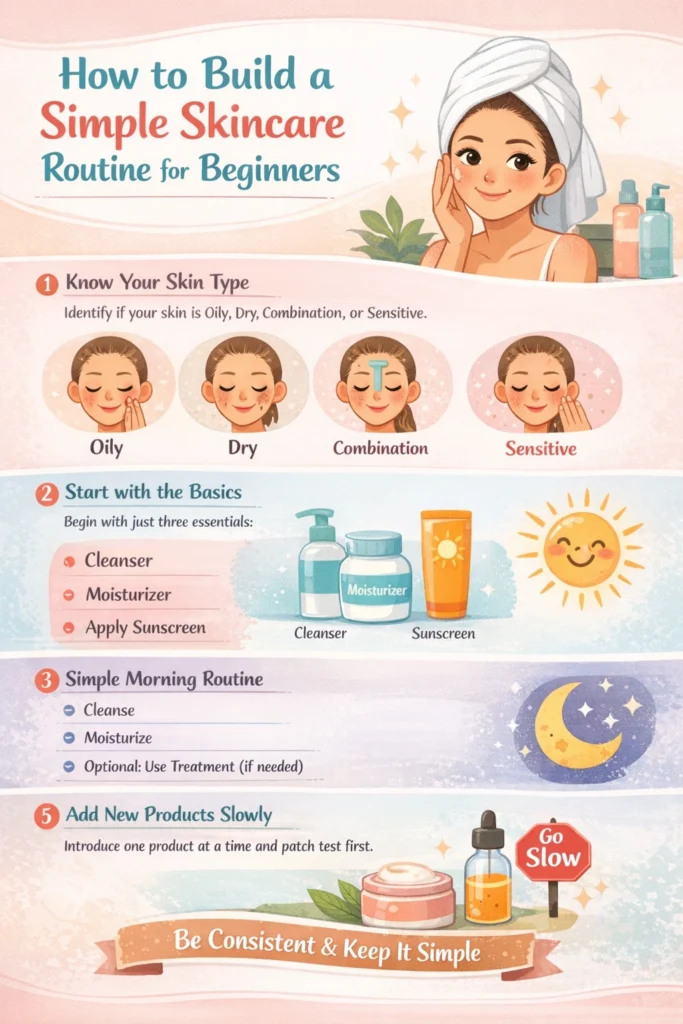
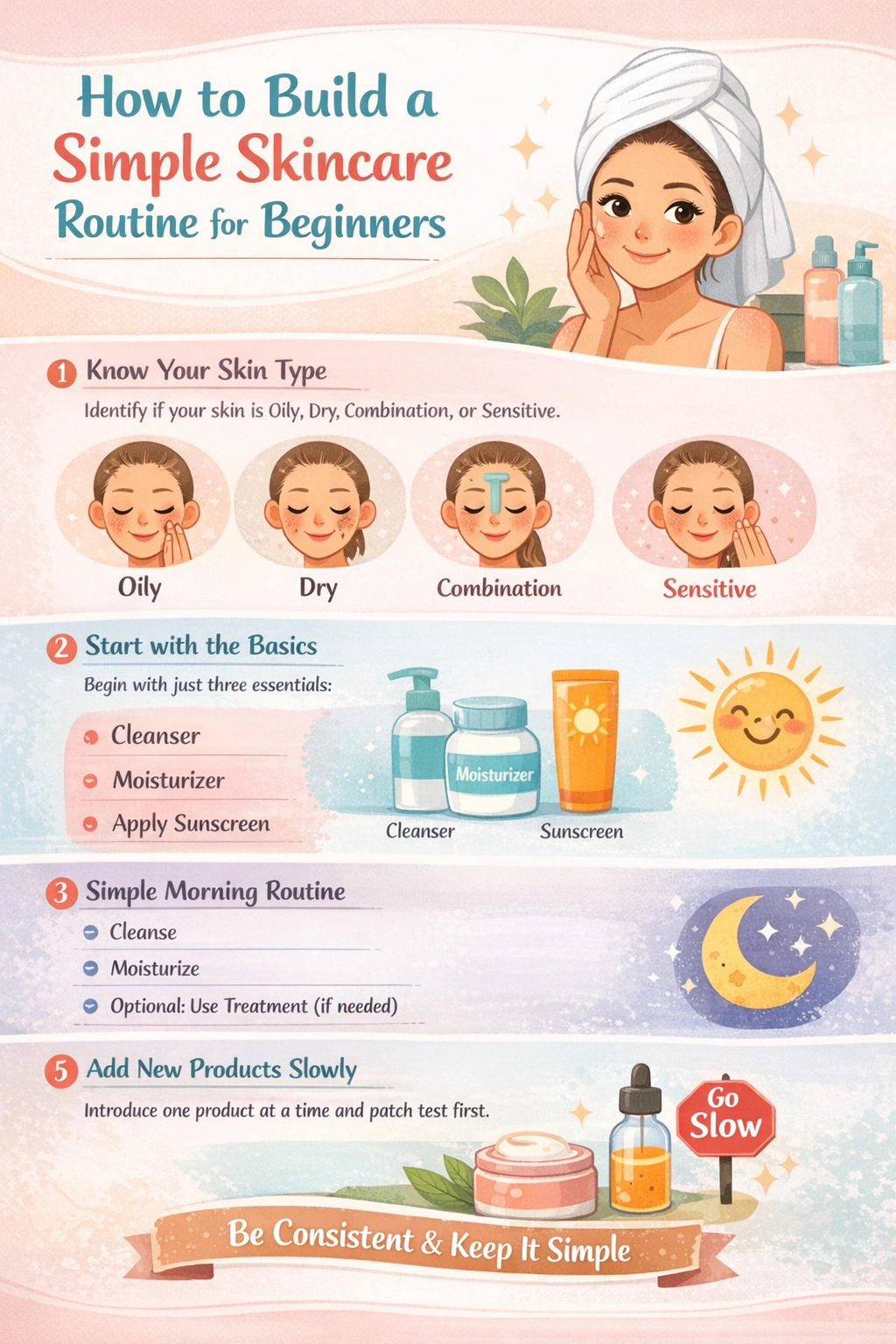
Before buying any skincare products, it is helpful to understand your skin type. This makes it much easier to choose the right cleanser, moisturizer, and other essentials. The main skin types are normal, oily, dry, combination, and sensitive.
Normal skin usually feels balanced. It is not too oily or too dry, and it tends to tolerate most products well. Oily skin often looks shiny, especially around the forehead, nose, and chin. It may also be more prone to clogged pores and breakouts. Dry skin can feel tight, rough, or flaky, especially after washing. Combination skin usually has both oily and dry areas, with the T-zone being oily and the cheeks more dry or normal. Sensitive skin may react easily to certain products, fragrances, weather changes, or harsh ingredients.
If you are not completely sure about your skin type, wash your face with a gentle cleanser and wait about 30 minutes without applying anything. Then observe how your skin feels. If it becomes shiny all over, it may be oily. If it feels tight or rough, it may be dry. If only some areas are shiny, you may have combination skin.
Knowing your skin type does not mean you need a perfect diagnosis right away. It simply helps you make better starting choices and avoid products that may not suit your skin.
Start With Only the Essential Products
One of the biggest beginner mistakes is buying too many products at once. A simple skincare routine should begin with just a few core items. This allows your skin to adjust gradually and makes it easier to notice what works and what does not.
The three most important products for a beginner are a cleanser, a moisturizer, and sunscreen. These form the foundation of a basic routine.
A cleanser helps remove dirt, oil, sweat, and impurities from the skin. Choose a gentle cleanser that does not leave your face feeling stripped or overly dry. A moisturizer helps keep the skin barrier healthy and reduces dryness or irritation. Even oily skin needs moisture, although a lighter formula is often better for that skin type. Sunscreen is essential because it protects the skin from UV damage, which can contribute to premature aging, dark spots, and other skin concerns.
Once you are comfortable with these basics, you can consider adding one treatment product if needed, such as a serum for hydration or a product designed for acne-prone skin. However, it is always better to build slowly rather than overwhelm your skin with too many active ingredients.
Build a Simple Morning Routine
A morning skincare routine does not need many steps. The goal is to refresh the skin, provide moisture, and protect it throughout the day.
Begin with a gentle cleanser. Some people with dry or sensitive skin may prefer simply rinsing the face with lukewarm water in the morning, especially if they cleansed well the night before. The purpose is to remove any oil or sweat that built up overnight without disrupting the skin barrier.
After cleansing, apply a moisturizer. This helps your skin stay comfortable and balanced during the day. If your skin feels oily, choose a lightweight or gel-based moisturizer. If it feels dry, a creamier formula may be a better choice.
The final and most important morning step is sunscreen. A broad-spectrum sunscreen with at least SPF 30 is a smart daily choice. Even if the weather is cloudy or you are indoors most of the day, sun protection still matters. Applying sunscreen every morning is one of the best habits you can build for long-term skin health.
A simple morning routine can be completed in just a few minutes, but its impact can be significant when done consistently.
Keep Your Evening Routine Gentle and Consistent
Your evening skincare routine is about cleansing the skin properly and helping it recover overnight. At the end of the day, your face may have sunscreen, oil, sweat, pollution, and makeup on it, so cleansing is especially important in the evening.
Use your cleanser to wash away the buildup from the day. If you wear heavier makeup or water-resistant sunscreen, you may benefit from a double cleansing method, where you use an oil-based cleanser first and then a gentle water-based cleanser. However, this is optional for beginners and not necessary unless you truly need it.
After cleansing, apply your moisturizer. Nighttime is an excellent time to support the skin barrier because your skin naturally goes through repair processes while you sleep. If you later decide to add a treatment product, the evening routine is often the best time to use it, but beginners should keep things simple at first.
Consistency is more important than complexity. A basic evening routine done every day will usually deliver better results than a complicated routine followed only occasionally.
Introduce New Products Slowly
It is tempting to try several new products at once, especially when you are excited about improving your skin. However, introducing products too quickly can lead to irritation, breakouts, or confusion about which product caused a reaction.
A better approach is to add only one new product at a time and use it for at least one or two weeks before introducing another. This gives your skin time to adjust and helps you understand whether the product is actually benefiting your skin.
Patch testing is also a good habit, especially if you have sensitive skin. Apply a small amount of the product to a discreet area, such as behind your ear or along your jawline, and wait to see if any irritation develops.
Beginners should be especially careful with strong active ingredients such as retinol, exfoliating acids, or highly concentrated treatments. These products can be useful, but they are not always necessary in the early stages of a skincare routine. It is usually better to first establish a healthy foundation with the basics.
Avoid Common Beginner Skincare Mistakes
Many skincare problems are not caused by the lack of products, but by using the wrong ones or using them incorrectly. One common mistake is over-cleansing. Washing your face too often or using a harsh cleanser can strip away natural oils and make the skin feel irritated or imbalanced.
Another mistake is skipping moisturizer because the skin feels oily. In reality, dehydration can sometimes make oiliness worse. A suitable lightweight moisturizer can help maintain balance. Skipping sunscreen is another frequent issue. Many beginners focus on cleansers and serums but forget that daily sun protection is one of the most valuable skincare habits.
Impatience can also cause problems. Skincare results usually take time. Some improvements may be visible within a few weeks, but many concerns require consistent care over a longer period. Changing products too often can make it harder to see progress.
It is also important not to compare your skin too much to what you see online. Filters, lighting, and editing can create unrealistic expectations. Healthy skin is not about perfection. It is about comfort, balance, and steady care.
Focus on Consistency Instead of Perfection
The most effective skincare routine is not the one with the most steps. It is the one you can realistically follow every day. A simple beginner routine built around cleansing, moisturizing, and sun protection can create a strong foundation for healthier skin.
As you learn more about your skin, you may decide to add targeted products for concerns like acne, dryness, dullness, or uneven tone. That is perfectly fine, but those additions should come later. In the beginning, the goal should be to support your skin, avoid irritation, and build habits that are easy to maintain.
Skincare should feel manageable, not stressful. When you keep things simple, stay patient, and pay attention to how your skin responds, you are far more likely to build a routine that truly works for you.