
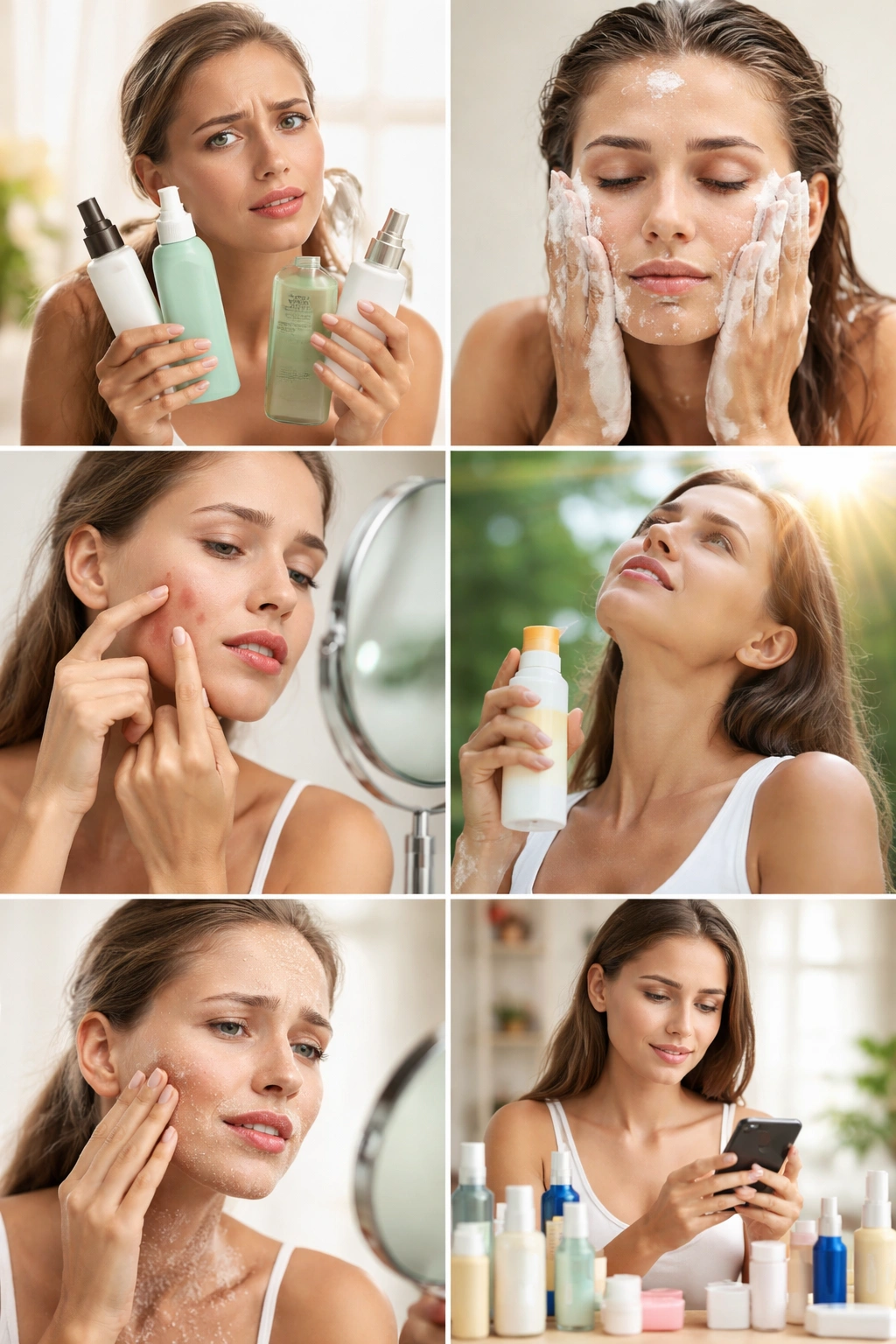

Taking care of your skin should help it stay balanced, comfortable, and healthy-looking. However, many people unintentionally make skincare mistakes that do the opposite. In many cases, skin problems are not caused only by genetics, weather, or stress. They can also be the result of habits that seem harmless at first but slowly weaken the skin barrier, increase irritation, or make breakouts worse.
The skincare industry is full of advice, product recommendations, and fast promises. Because of that, it is easy to believe that more products always mean better results. In reality, healthy skin usually responds best to consistency, gentle care, and products that suit your actual needs. Overdoing your routine, using the wrong ingredients, or copying trends without understanding your skin can create more problems than solutions.
If your skin often feels irritated, tight, greasy, red, or unpredictable, it may be worth looking at your daily habits. Sometimes the solution is not adding another serum or mask, but removing the small mistakes that are causing stress for your skin in the first place.
Using Too Many Products at Once
One of the most common skincare mistakes is applying too many products in the same routine. It is understandable why this happens. People see different cleansers, exfoliants, toners, serums, masks, oils, and creams and assume they all need to be used together for the best results. But layering too many products can overwhelm the skin, especially if several of them contain active ingredients.
When the skin is exposed to too many formulas at once, it becomes harder to identify what is helping and what is causing irritation. If redness, breakouts, stinging, or dryness appear, you may not know which product is responsible. This often leads to even more confusion and product switching.
A better approach is to keep your routine simple. Most people can build a strong skincare foundation with a gentle cleanser, a moisturizer, and sunscreen during the day. Additional products should be added only when there is a clear reason for them and only one at a time. This makes it much easier to understand how your skin reacts and what it truly needs.
Skincare should not feel like a competition to use the most products. It should feel manageable and supportive.
Over-Cleansing and Stripping the Skin
Cleansing is essential, but too much cleansing can be harmful. Many people wash their face too often or use cleansers that are too harsh for their skin type. This is especially common among people with oily or acne-prone skin, who may think that removing as much oil as possible will improve their complexion. In reality, over-cleansing can damage the skin barrier and create even more imbalance.
When you wash your face too aggressively, the skin loses not only dirt and excess oil, but also the natural protective layer that helps keep moisture in and irritants out. This can leave the skin feeling tight, dry, sensitive, or inflamed. In some cases, stripped skin may even produce more oil in response, making the face look shinier over time.
A gentle cleanser used once in the morning and once in the evening is enough for most people. The cleanser should remove impurities without leaving the skin feeling squeaky, tight, or uncomfortable. Hot water can also make irritation worse, so lukewarm water is usually the better choice.
Clean skin should feel refreshed, not stressed.
Skipping Moisturizer Because the Skin Feels Oily
Many people with oily or combination skin avoid moisturizer because they believe it will make their skin heavier, shinier, or more likely to break out. This is a very common misunderstanding. In reality, all skin types need moisture, including oily skin.
When the skin does not get enough hydration, it can become dehydrated and irritated. Sometimes this triggers the skin to produce even more oil, which only adds to the original problem. The result can be a cycle where the skin feels greasy on the surface but still lacks proper hydration underneath.
The key is choosing the right type of moisturizer. People with oily skin often do well with lightweight gel or lotion formulas, while dry skin may need richer creams. A well-formulated moisturizer helps support the skin barrier, reduce irritation, and maintain a healthier balance throughout the day.
Skipping moisturizer may seem like a smart move in the short term, but in the long run it often makes the skin less stable and more reactive.
Ignoring Sunscreen in Daily Skincare
One of the most damaging skincare mistakes is not using sunscreen regularly. Many people only think about sun protection during summer, beach trips, or sunny vacations. However, UV exposure affects the skin all year round, even on cloudy days and even when you are not spending long hours outside.
Sun damage can contribute to premature aging, dark spots, uneven skin tone, loss of firmness, and irritation. It can also make acne marks and post-inflammatory pigmentation last longer. Even the best skincare routine will have limited results if the skin is left unprotected from daily UV exposure.
A broad-spectrum sunscreen with at least SPF 30 should be part of a regular morning routine. It should be applied as the final step after moisturizer and before makeup. If you spend more time outdoors, reapplication becomes important as well.
Many people invest in expensive serums and treatment products while skipping sunscreen, but this creates an imbalance in the routine. Protection is just as important as correction. Without it, the skin continues to face damage that could have been reduced with a simple daily habit.
Over-Exfoliating the Skin
Exfoliation can improve the appearance of dull skin and help remove dead skin cells, but too much exfoliation is one of the fastest ways to irritate the skin. Some people use scrubs every day, combine exfoliating acids with other strong treatments, or assume that a tingling or burning feeling means the product is working. In most cases, that is a sign that the skin is under stress.
Over-exfoliated skin often becomes red, sensitive, dry, shiny, or rough. It may start to sting when you apply products that never caused problems before. Breakouts can also become worse because the skin barrier is weakened.
Physical scrubs with rough particles can be especially harsh when used too often, while chemical exfoliants such as AHAs and BHAs should also be used carefully. Beginners do not need to exfoliate daily. For many people, once or twice a week is enough, depending on the product and skin type.
Exfoliation should help renew the skin gently, not leave it raw or uncomfortable. More is not better when it comes to active treatments.
Following Trends Instead of Listening to Your Skin
Skincare trends spread quickly. One week everyone is talking about a certain acid, the next week it is a new mask, oil, or celebrity routine. While some trends can be useful, blindly following them is a mistake. Not every popular product is suitable for every skin type, and not every ingredient is necessary for your personal routine.
What works for someone else may irritate your skin or simply offer no real benefit. Social media often encourages people to chase quick transformations, but healthy skin is usually built through patience and consistency rather than dramatic changes. It is also important to remember that online content often includes filters, strong lighting, editing, or sponsored recommendations.
Instead of copying routines step by step, focus on understanding your own skin. Pay attention to how it reacts after cleansing, moisturizing, exfoliating, or trying a new ingredient. If your skin feels calm, balanced, and comfortable, that is usually a good sign. If it feels irritated, tight, itchy, or unpredictable, something in your routine may need to change.
Your skin does not need every trending product. It needs care that makes sense for you.
Touching, Picking, and Being Impatient With Results
Another very common mistake is touching the face too often or picking at blemishes. This habit can spread bacteria, increase inflammation, slow healing, and raise the risk of marks or scarring. Even when it feels tempting to squeeze a spot, doing so often makes the area look worse and take longer to recover.
Impatience is another issue that affects many people. Some expect products to transform their skin in a few days and give up too quickly when results are not immediate. Others switch routines constantly, which prevents the skin from adjusting. Most skincare products need time. Depending on the concern, visible improvement may take several weeks or longer.
Skin responds best to steady care. A simple, consistent routine usually delivers better results than a complicated routine that changes every week. Small habits matter more than dramatic efforts done occasionally.
When you stop interfering with your skin and start supporting it properly, it often becomes much easier to maintain.